Death of Titan and Rex
Cinnamon BunDeath of Titan and Rex is the decisive ambush in which Broccoli Bunch, fleeing a cervid attack on Amaryllis, draws the pursuers into a confrontation that ends with Throat Ripper and the accompanying undead killing Titan and Rex. Broccoli’s role is neither that of a detached observer nor the primary combatant: the system explicitly records that she helped kill people above her level, grants reduced but consequential rewards, and leaves her shaken by the strength she has gained.
Causes and Immediate Stakes
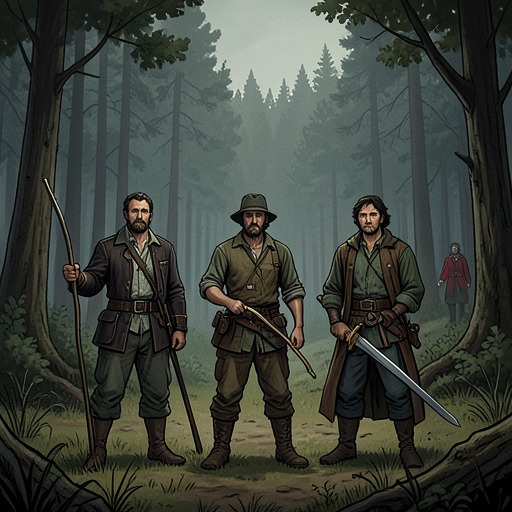
The action begins when Broccoli discovers the cervids preparing to harm Amaryllis. After the group notices that someone is watching them, their leader orders “Two, Four, after her!” Broccoli does not wait to identify the assigned pursuers. She launches herself from the hill, spending enough stamina on the movement to fly across the landscape, but the fleeing maneuver becomes a pursuit rather than an escape. Hooves thunder behind her, and the attackers begin closing the distance.
The chase carries a direct ethical charge. Broccoli is not running toward a chosen battle or seeking a reward; she is trying to draw danger away from Amaryllis and survive the consequences. One cervid uses a staff to project an almost transparent whip, which shoots forward after her. The threat is therefore both physical and coordinated: the pursuers have speed, magic, and a clear willingness to continue the attack.
Throat Ripper’s Intervention
The balance changes when Throat Ripper answers the danger. Before the decisive violence, his sound is described as coming from deep in his bones and shaking the air. The effect enters Broccoli’s body so forcefully that she has difficulty breathing, and his subsequent roar triggers a system confirmation that she has heard the roar of a fearsome creature and that her soul is shaken. The intervention functions as intimidation before it becomes combat. The attackers are confronted not merely by another fighter, but by a presence whose voice itself produces a supernatural effect.
The scene then shifts abruptly from pursuit to annihilation. A skeleton bursts from the mud while another drops from a tree, and the screams soon stop. The ambush is not presented as a prolonged duel with evenly described exchanges. Instead, the landscape seems to close around the pursuers, with Throat Ripper’s terror and the undead attack ending the immediate threat before Broccoli can fully process what has happened.
The Deaths of Titan and Rex
The system identifies the dead by name and build: Titan was a level-12 Wind Runner with Wind Tear at level 4, while Rex was a level-10 Flaming Lancer. Their levels establish the scale of the reversal. The cervids had been hunting Broccoli, yet the hunters become the defeated party, and both are recorded as people rather than anonymous monsters. That distinction matters because the outcome is not a routine monster-clearing exercise; it is a lethal intervention in a conflict involving sentient opponents.
The notification also carefully qualifies Broccoli’s responsibility. It announces that she has killed Titan and Rex, awards bonus experience for killing people above her level, and immediately states that the reward is reduced because she was not the primary combatant. The wording produces a double result: Broccoli is credited with the deaths, but the system acknowledges that Throat Ripper and the undead carried the main force of the attack. Her agency is therefore morally and mechanically unstable. She made the choice to flee, created the circumstances of the encounter, and benefited from its conclusion, but she did not directly perform the decisive killing blows.
Reward, Guilt, and the Leveling Interface
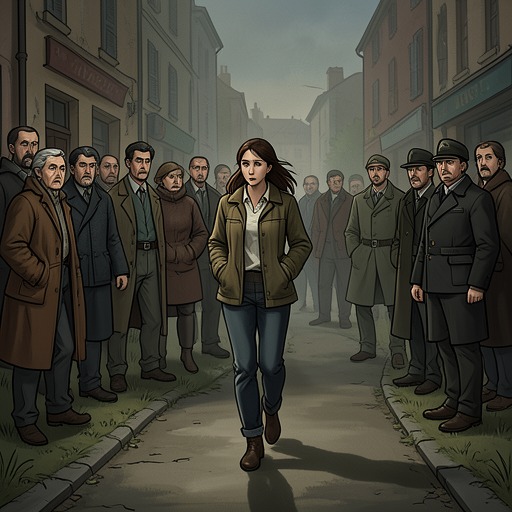
Broccoli responds to the announcement with a whispered refusal. When the accusation-like prompt disappears, she still begs Mister Menu to take the reward back, insisting that she did not deserve a level and did not deserve to become stronger. The language of the interface turns advancement into an uncomfortable judgment: the level is not simply a prize but a record of violence attached to her name.
The system nonetheless proceeds. It grants her ten points of Flexibility and one Class Point, while the level-up prompt remains visible despite her request. Her earlier experiences have already established the same mechanism in less morally fraught forms. A quest can summon her to save the world; a Special Action performed in line with her class can unlock Cleaning; killing three Sentinel Ghosts can produce bonus experience and advance her Cinnamon Bun class; and repeated social effort can unlock the general skill Friendmaking. Against that background, the deaths of Titan and Rex reveal the leveling system’s wider logic: cleaning, friendship, quest obedience, and lethal survival can all be translated into comparable notifications, skills, points, and progression.
That equivalence creates the event’s central irony. Broccoli’s ethical reaction distinguishes the deaths from the other achievements, but the interface absorbs them into the same grammar of advancement. Her appeal to Mister Menu fails to interrupt the process. The system’s reward is not presented as something she can morally negotiate away; it becomes an imposed consequence of having survived and participated in the encounter.
Consequences and Narrative Significance
The immediate consequence is the removal of the pursuers and the rescue of Amaryllis from the danger posed by the cervids. Broccoli also gains concrete mechanical benefits: Flexibility, a Class Point, experience for enemies above her level, and a level-up that she neither sought nor welcomes. Throat Ripper’s intervention establishes the protective force available to her party, while the skeletons’ sudden appearance shows that the confrontation can be resolved through allies whose violence exceeds Broccoli’s own capabilities.
The event also changes the meaning of strength for Broccoli. Earlier progress could be treated as humorous or practical: Cleaning is “silly” and “rather boring,” yet useful; defeating Sentinel Ghosts is frightening but framed through the exhilaration of survival; Friendmaking turns repeated social contact into a general skill. Here, strength arrives with the deaths of Titan and Rex and with Broccoli’s explicit belief that she should not possess it. The scene therefore binds empowerment to responsibility rather than simple triumph.
As an action within the broader quest narrative, Death of Titan and Rex combines pursuit, rescue, and underdog reversal. Broccoli begins as the hunted target, uses movement rather than direct combat, and survives because a stronger ally and undead companions transform the chase into an ambush. Its lasting importance lies in the unresolved gap between what the system calls a successful kill and what Broccoli experiences as an undeserved moral burden. The world may reward her sacrifice, but the event leaves her asking whether survival itself has made her complicit in a kind of power she cannot yet accept.